“Power of Poison”
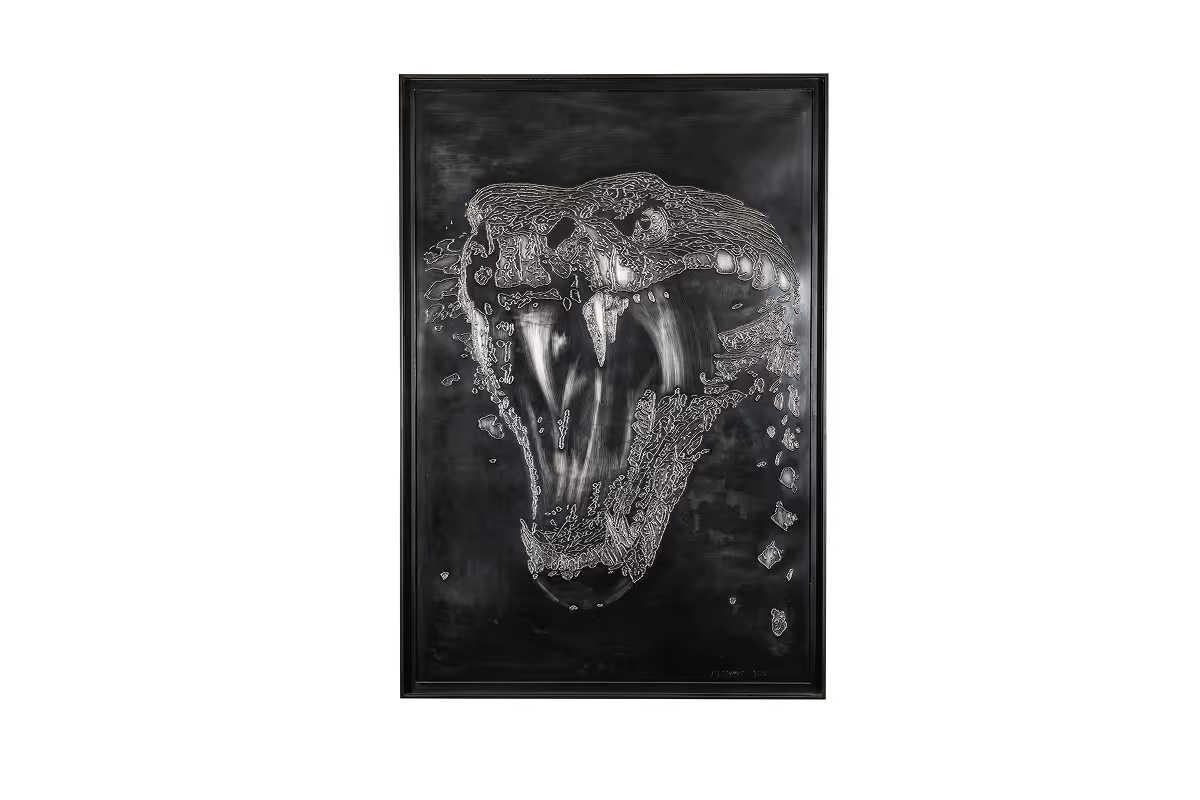
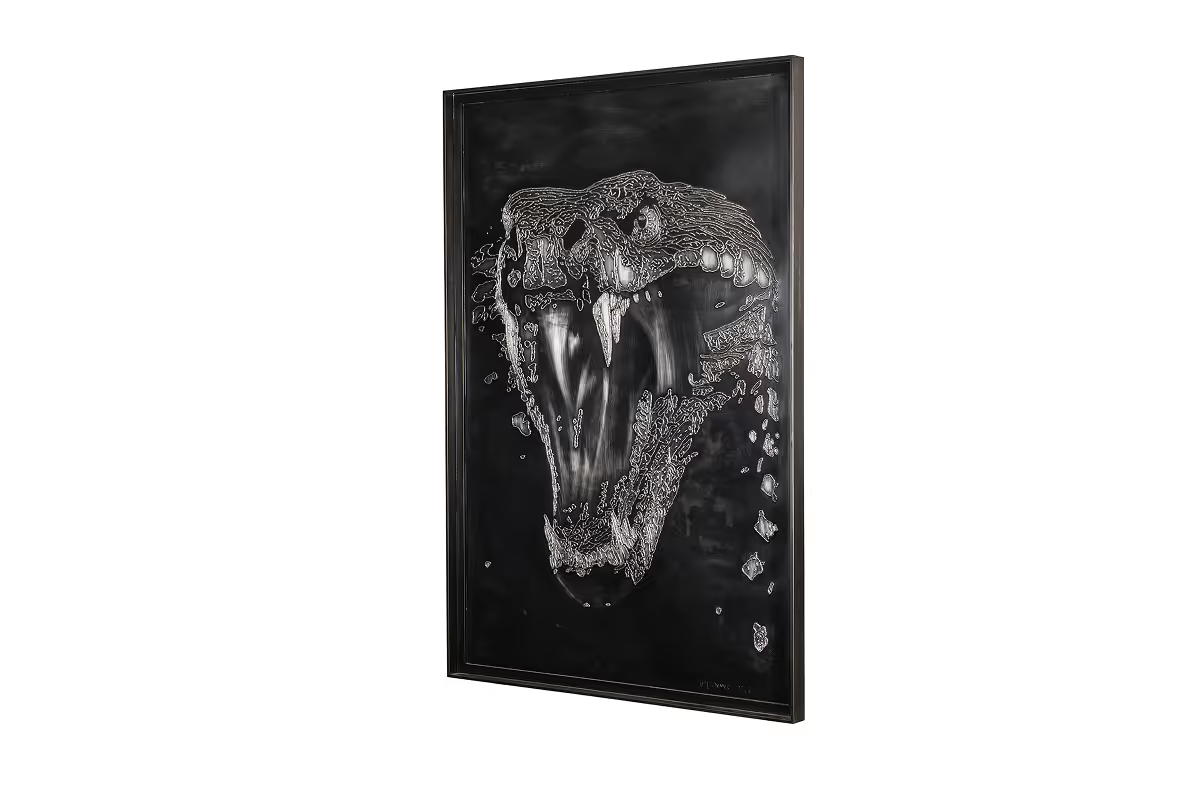
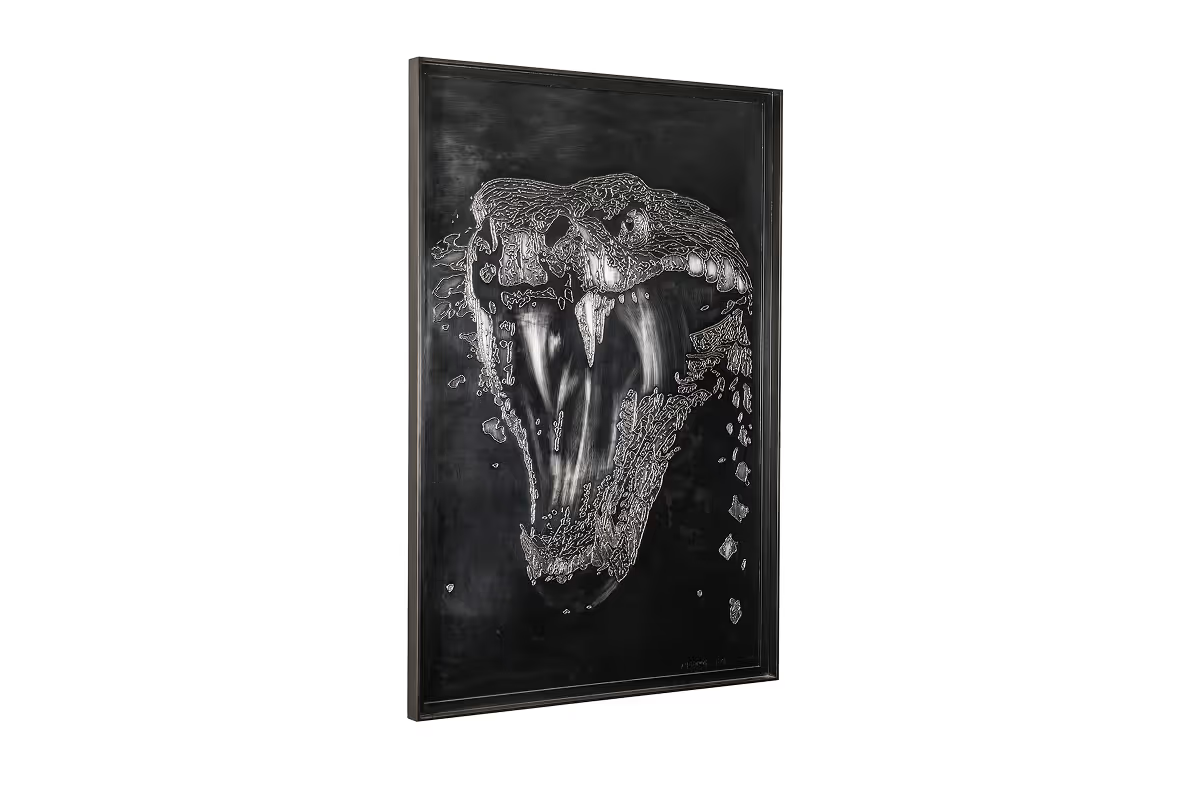
The viewer is confronted with an image that is both eerie and majestic—the gaping maw of a snake, frozen in the moment of attack. This is not merely a reptile, but a symbol etched in metal and fire. At first glance, it seems as though a predatory shadow is emerging from the darkness, ready to strike with its lightning-fast venom. The painting both captivates and frightens, for it embodies not only physical danger but also a profound metaphor—the power hidden in poison, in a word, in a thought, in a choice.
The viewer is confronted with an image that is both eerie and majestic—the gaping maw of a snake, frozen in the moment of attack. This is not merely a reptile, but a symbol etched in metal and fire. At first glance, it seems as though a predatory shadow is emerging from the darkness, ready to strike with its lightning-fast venom. The painting both captivates and frightens, for it embodies not only physical danger but also a profound metaphor—the power hidden in poison, in a word, in a thought, in a choice.
Image and Form
The textured surface of the metal gives the impression that the snake’s mouth is coming to life. The shimmering highlights reflect the curves of the fangs, the cold gleam of the venomous teeth, and the dark recesses inside the mouth. This interplay of light and shadow creates a unique sense of movement: it seems as though the snake is about to strike at any moment.
The artist’s welding technique gives the canvas a sense of movement: the contours are not static; they seem to pulsate, breathe, and shimmer. The metal becomes a living organism, harboring the power of a predator. This makes the work more than just an image—it transforms into energy that is transmitted from the material to the viewer.
The Symbolism of Poison
Poison has always been a symbol of duality. On the one hand, it represents death, danger, and fear. On the other, it is a force that, in the right hands, can become medicine, purification, even salvation. In this painting, the snake appears not only as a threat but also as a reminder: any force in the world is neutral until a person chooses how to use it.
“The Power of Poison” can be interpreted as a metaphor for human language. Words can wound more deeply than weapons, or they can heal. In a single glance, a phrase, or a decision—there is the same concentration of energy as in a drop of snake venom. This work speaks of responsibility: everyone carries “poison” within themselves—emotions, thoughts, actions. And it depends solely on an inner choice whether it will become a weapon of destruction or a medicine of transformation.
A black background like an abyss
The deep black background is not merely a backdrop—it embodies the boundless expanse of the unknown. It is the darkness from which both fear and courage are born. The snake emerges from the darkness, like a force that has long slumbered in the depths and is now bursting forth. This contrast between the light metal and the dark background emphasizes the struggle between the visible and the hidden, between instinct and consciousness.
Emotional impact
The viewer feels the tension mounting, their gaze involuntarily drawn to the fangs poised to strike. There is a sense of immediacy here—a single second in which fate is decided. This emotional intensity creates an immersive effect: the painting compels you not just to look, but to experience the moment of danger, to empathize, and to ask yourself questions.
The philosophical subtext
“The Power of Poison” is also about the inner struggle within a person. Everyone has hidden fears, instincts, and aggression. They are like poison: they cannot be destroyed, but they can be controlled. The work reminds us that true strength lies not in hiding one’s poison, but in learning to manage it, channel it into a creative outlet, and transform danger into the energy of life.
Technology and Uniqueness
Metal, as a material, emphasizes the coldness and danger of the image. Unlike canvas or paper, it is strong, rigid, and durable. This conveys another meaning: poison is not something instantaneous, but a force that leaves a lasting mark. Just as welding marks on metal, so too do a person’s actions, words, or choices leave deep “imprints” on history.
Conclusion
The painting “The Power of Poison” is not merely a depiction of a predator. It is a profound symbol in which fear and strength, danger and opportunity, darkness and light intertwine. It reminds us that there is poison within each of us—but we decide how to use it. And perhaps a person’s true power lies precisely in transforming that poison into a force capable of changing lives.
What Our Customers Say


Lorem ipsum dolor sit amet, consectetur adipiscing elit. Suspendisse varius enim in eros elementum tristique. Duis cursus, mi quis viverra ornare.
Lorem ipsum dolor sit amet, consectetur adipiscing elit. Suspendisse varius enim in eros elementum tristique. Duis cursus, mi quis viverra ornare.
Lorem ipsum dolor sit amet, consectetur adipiscing elit. Suspendisse varius enim in eros elementum tristique. Duis cursus, mi quis viverra ornare.