“Freedom in the Chains of the Dollar”
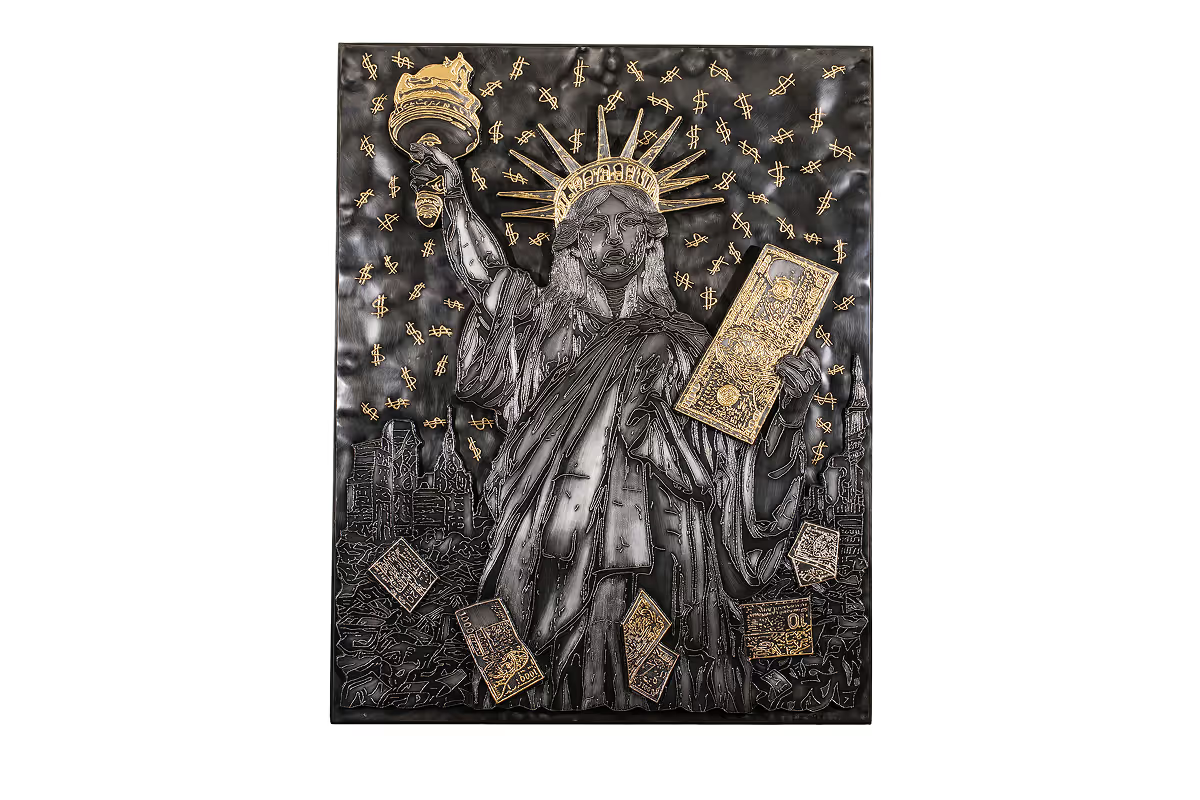
The central figure is the Statue of Liberty—one of America’s most famous symbols, which is associated worldwide with democracy, independence, and the dream of freedom.
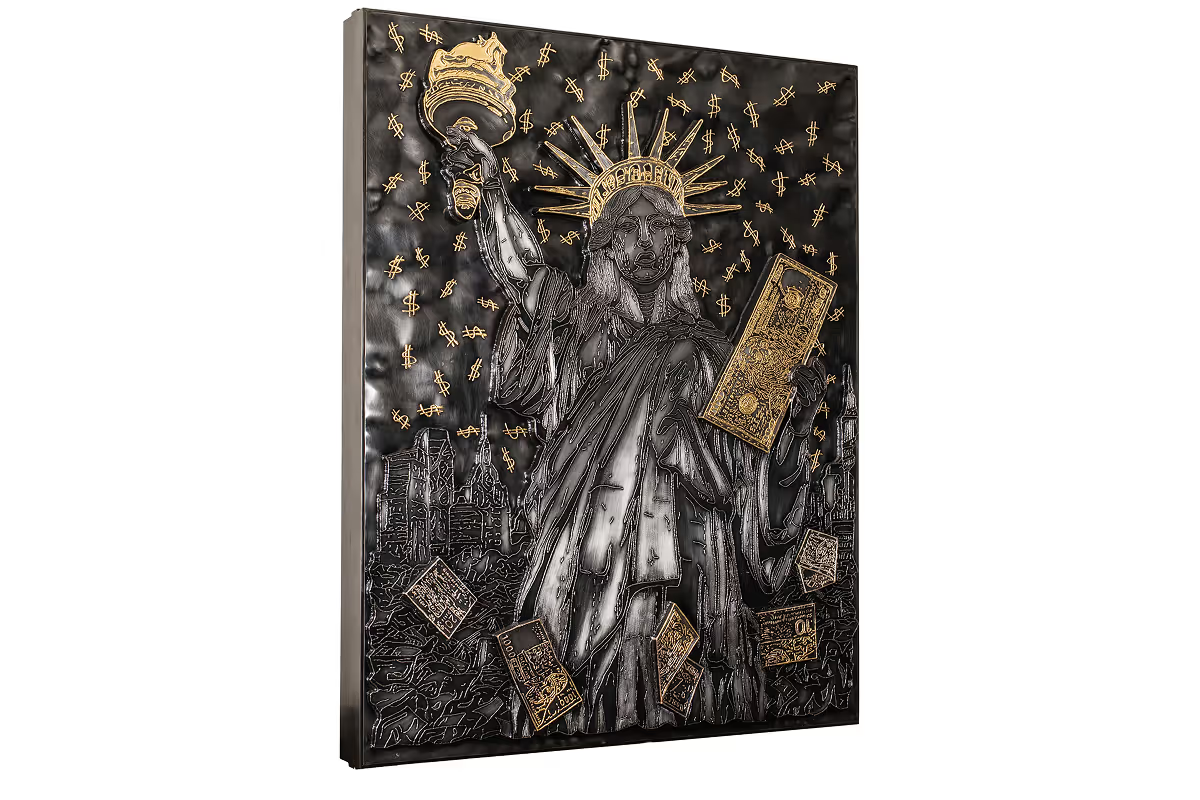
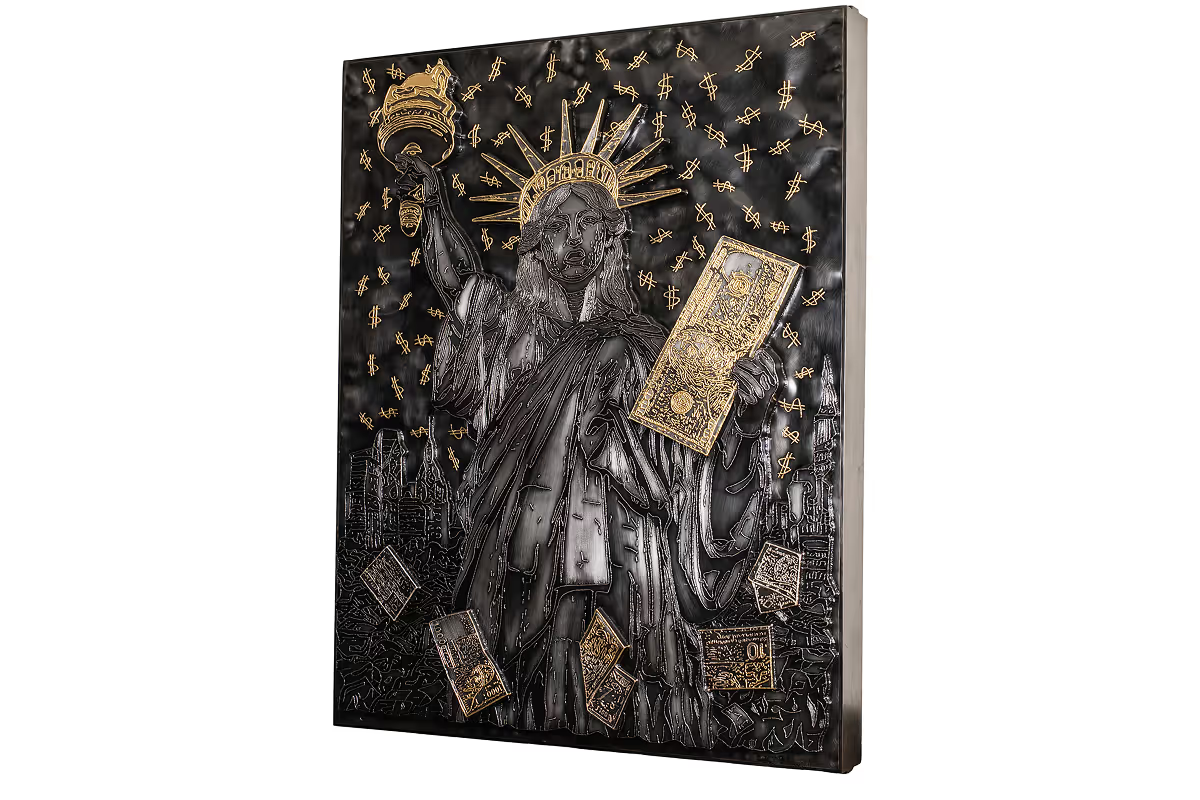
We are presented with an image that is both familiar and unsettling. The central figure is the Statue of Liberty—one of America’s most famous symbols, universally associated with democracy, independence, and the dream of freedom. But in this interpretation, the artist radically alters the traditional meaning of the image. Here, Liberty does not hold a book of laws or a torch symbolizing enlightenment and hope. Instead, her hands are occupied with other, far more telling objects: in one hand, a torch adorned with a crown; in the other, a giant banknote.
Against the backdrop of the painting, dollar signs scatter in golden flashes, seemingly filling the entire sky and creating the impression of an endless rain of money. This is not merely a decorative motif. It is a metaphor for the modern world, where money has become a new religion, a new “light from above.” In this reality, even the Statue of Liberty looks not like a free and majestic figure, but rather like a hostage of the financial system.
The Deconstruction of Ideals
The traditional meaning of the Statue of Liberty is the light of democracy, the ideals of equality, and human rights. However, in this painting, the artist shows that these ideals have lost their original power. They have been replaced by gold and money. Instead of a book, which was meant to symbolize law and justice, we see a banknote—a symbol of capital. Instead of a pure torch illuminating the path to the future, we see a crown that evokes power more than truth.
This is a poignant commentary on the modern world, where democracy is often supplanted by the interests of large corporations, and freedom becomes a privilege reserved for those with capital. The film poses a question to the viewer: is there still room for true ideals of freedom if everything is measured in dollars?
Materiality and Technique
The choice of material—metal—plays a significant role in how the work is perceived. It is the metal that creates an impression of heaviness, rigidity, and coldness. While the bronze Statue of Liberty in New York evokes associations with resilience and strength, here the metal reinforces a different feeling—that of bondage. It is as if the very fabric of freedom is shackled in iron, from which it is difficult to break free.
Engravings, raised lines, and gold accents add a layer of symbolism. The gold on the torch, the crown, and the dollar signs does not so much emphasize wealth as it exposes its illusory nature. It is a “light” that blinds but does not warm.
Context and Social Criticism
This work can be interpreted as a critique of the capitalist system, which has overshadowed the original ideal of freedom. America, once a symbol of hope for millions of immigrants, is turning into a place where financial success takes precedence over human values.
Surrounding the central figure, one can see ruined buildings, fragments of maps, and banknotes—a visual chaos symbolizing the instability and destruction brought about by the cult of money. Freedom, instead of leading the people forward, is forced to hold the very symbols of this system in its hands.
A philosophical tone
In a broader sense, this painting explores the relationship between freedom and material values. Is true freedom possible in a world where everything is bought and sold? Can a person be free if their life is determined by financial resources? And doesn’t the very symbol of Freedom become an ironic mask—grand on the outside, but hollow on the inside?
The artist seems to be saying: “We live in a world where freedom is no longer measured by rights or the ability to express oneself. Freedom has become a commodity. And its price is the dollar.”
Impact on the audience
Visually, the artwork is striking for its contrast between dark metal and gold accents. It compels viewers to pause and examine the details: every symbol, every banknote, every crack in the Statue of Liberty is a symbol of a deeper meaning. It is a work that sparks discussion, as it challenges established notions.
The viewer may feel a sense of unease—after all, a symbol that has always been associated with hope is portrayed here in a somewhat tragic light. But it is precisely this unease that is the purpose of art: to make us reflect, to question the obvious, and to reevaluate our own values.
Conclusion
“Freedom in the Shackles of the Dollar” is not merely an artistic experiment, but a powerful social allegory.
It depicts a modern world where money has replaced truth, where symbols have lost their original meaning, and where ideals of freedom have become nothing more than a shadow behind a gilded facade.
This image reminds us that freedom cannot be genuine if it depends on material wealth. And as long as the dollar looms overhead like a new “sun,” humanity risks losing what is most precious—the ability to be free not for the sake of money, but for the sake of life, dignity, and truth.
What Our Customers Say


Lorem ipsum dolor sit amet, consectetur adipiscing elit. Suspendisse varius enim in eros elementum tristique. Duis cursus, mi quis viverra ornare.
Lorem ipsum dolor sit amet, consectetur adipiscing elit. Suspendisse varius enim in eros elementum tristique. Duis cursus, mi quis viverra ornare.
Lorem ipsum dolor sit amet, consectetur adipiscing elit. Suspendisse varius enim in eros elementum tristique. Duis cursus, mi quis viverra ornare.