“Cyborg Dream”
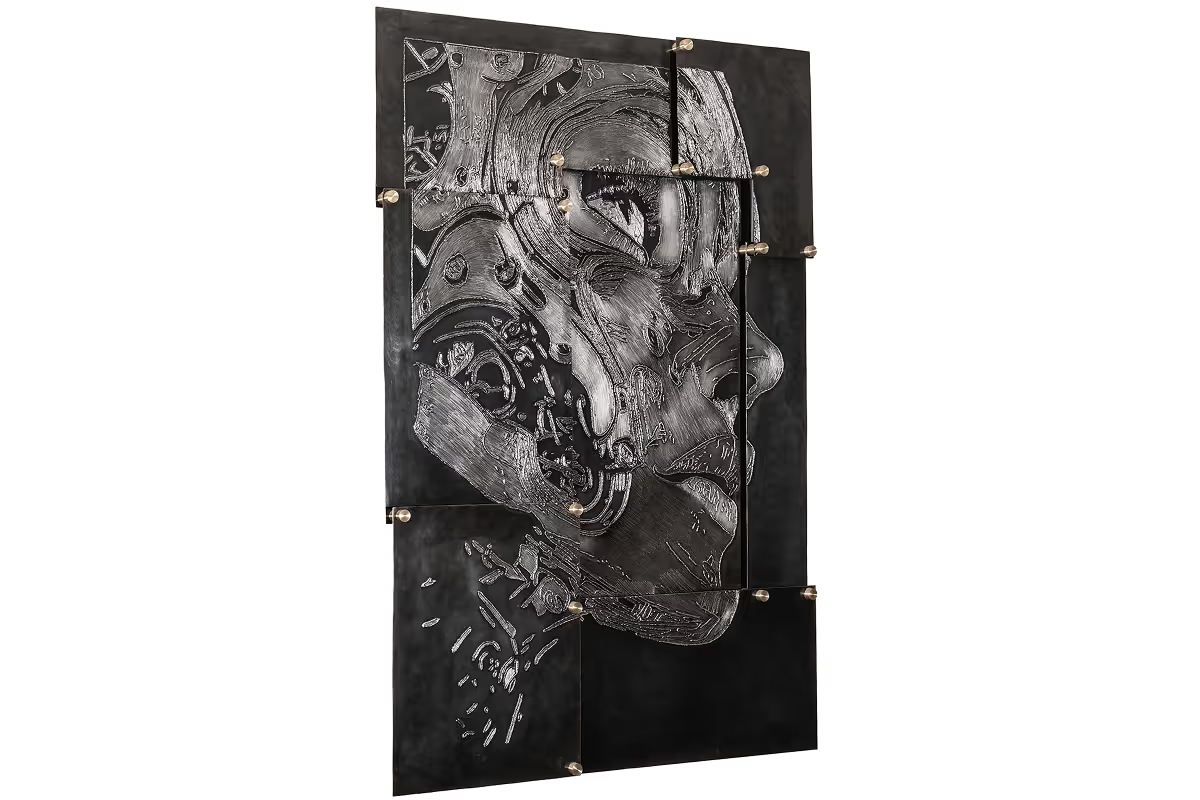
Before us lies an extraordinarily multifaceted work, created on metal using a technique that blends industrial rigidity with artistic sensitivity. It seems to hover on the border between man and machine, between dream and reality.
Before us lies an extraordinarily multifaceted work, created on metal using a technique that blends industrial rigidity with artistic sensitivity. It seems to hover on the border between man and machine, between dream and reality.
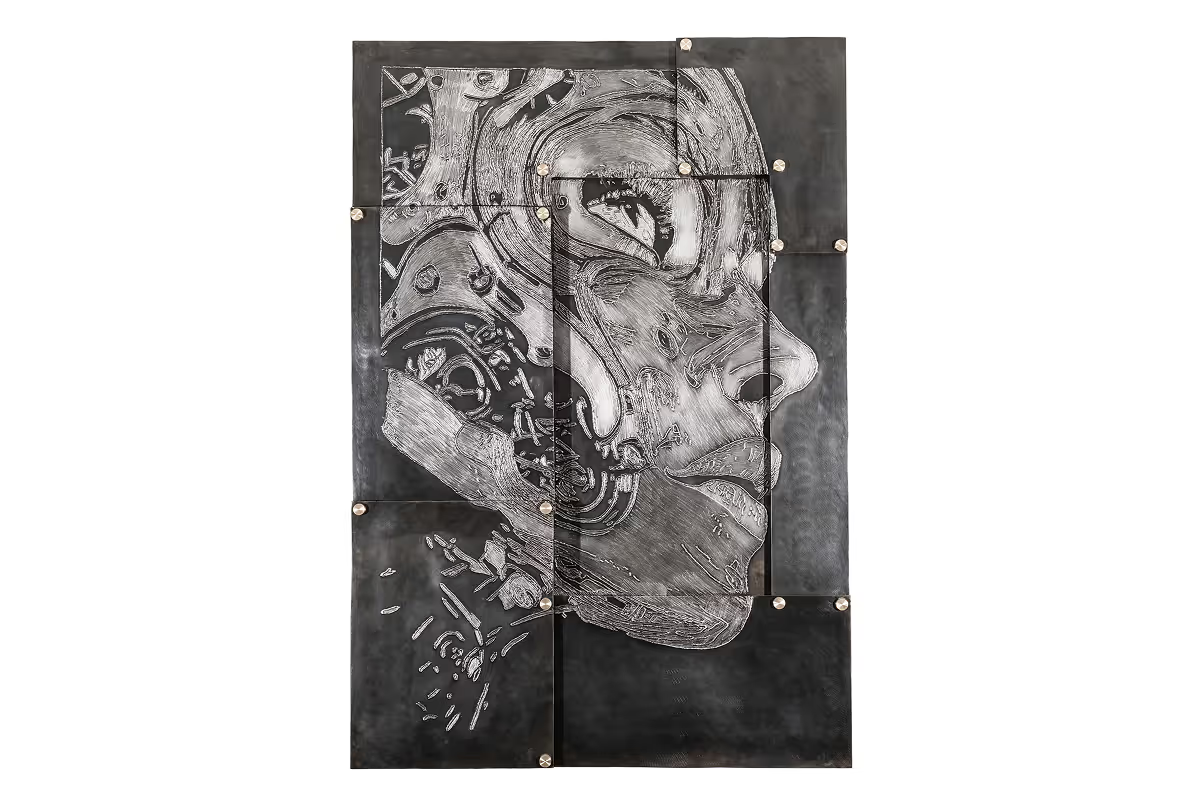
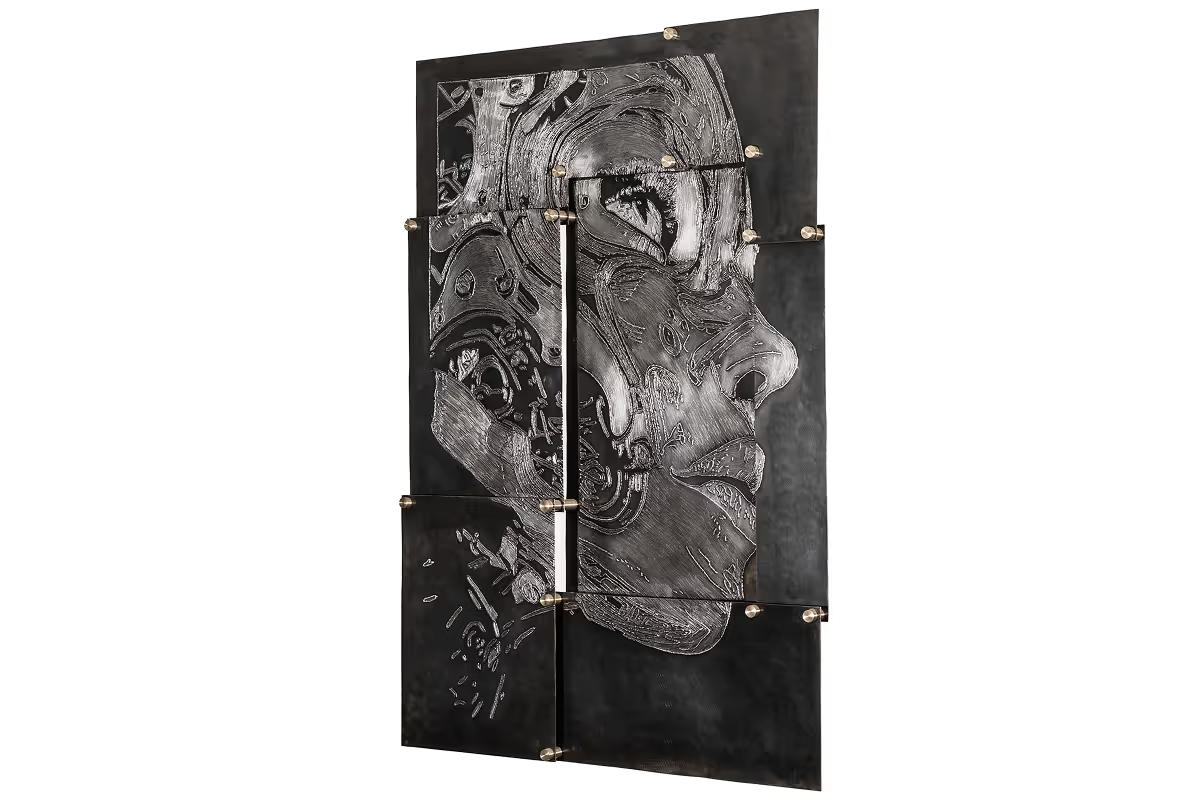
At first glance, we see a profile of a human face, yet it is not entirely human. Woven into it are mechanical elements resembling gears, bolts, and the inner workings of a machine. This is the image of a cyborg—a being born of a fusion of flesh and metal. This harmonious blend reveals what the artist wanted to emphasize: humans have long since ceased to be merely biological beings. We are part of a technological era where the organic and the mechanical merge into one.
Symbolism and Philosophy of the Work
The painting conveys a profound metaphor for the modern world. The profile emerging from the dark expanse of metal seems to be trying to break through time and space. The face looks upward, toward the future, toward an invisible horizon. This gaze reveals not the indifference of a machine, but a living dream. It is a hint that even in a world of cyborgs, where technology and algorithms reign, there remains a place for the human soul, for dreams, for hope.
The title “The Cyborg’s Dream” is no accident. It makes one wonder: what could a being made of metal and wires possibly dream of? Is a machine capable of feeling? Is an imaginary reality possible for one whose nature is defined by cold logic? And therein lies the paradox: this painting demonstrates that even an artificial mind and a mechanical body yearn for light, for freedom, for beauty.
Structural composition
The work is composed of several metal plates fastened together with bolts. This is not merely a technical technique, but an important artistic gesture. Each metal plate is a fragment of a mosaic, a part of a larger picture that comes together only through perseverance and precision. This structure symbolizes the fragmentation of the modern consciousness, where the human “self” is composed of countless elements—social roles, memories, emotions, and technological influences.
The bolts holding these pieces of metal together serve as a reminder of fragility: the cyborg’s face could fall apart if even a single screw were removed. At the same time, it is a metaphor for resilience—for it is in the unity of the parts that strength is born.
The Aesthetics of Light and Shadow
The play of light on the metal surface deserves special attention. The black and gray tones, scratches, and engraved lines create a sense of living texture. In the darkness, shimmering reflections glisten, forming facial features. It resembles the moment an idea is born: when a spark appears in the darkness of the unknown, it reveals the image of a dream before us.
The cyborg’s eyes are depicted with particular expressiveness. They are filled with an emotion that borders on human longing. It is as if this creature sees something more than just the world around it. Its gaze is directed inward, into the depths of its own imagination. This is the cyborg’s “dream” or “vision.”
Human or machine?
The work raises questions of identity. It blends the organic and the artificial, the real and the fictional. We do not know who this figure truly is: whether it is a human being who has been mechanized, or a machine that has been endowed with human traits. And it is in this ambiguity that the work’s greatest power lies.
The artist doesn’t provide a direct answer; he merely poses a question. Can we truly call ourselves fully human if we have long been dependent on technology? Our bodies are enhanced by prosthetics, our eyes see through screens, and our minds work in tandem with artificial intelligence algorithms. And perhaps we are all already cyborgs in our own dreams and reality.
The Philosophy of the Future
“The Cyborg’s Dream” is not just a film, but also a vision of the future. It compels us to imagine a world where the line between human and machine has vanished completely. And in this world, the defining question becomes: what is it that makes us human? If even a cyborg can dream, then a dream is the last bastion of human essence—something that cannot be replicated by an algorithm.
Perhaps it is dreams that will save us from becoming machines once and for all. Or, conversely, perhaps dreams will make machines more like us. In any case, this image combines fear and hope, the coldness of steel and the warmth of thought, technology and sensuality.
What Our Customers Say


Lorem ipsum dolor sit amet, consectetur adipiscing elit. Suspendisse varius enim in eros elementum tristique. Duis cursus, mi quis viverra ornare.
Lorem ipsum dolor sit amet, consectetur adipiscing elit. Suspendisse varius enim in eros elementum tristique. Duis cursus, mi quis viverra ornare.
Lorem ipsum dolor sit amet, consectetur adipiscing elit. Suspendisse varius enim in eros elementum tristique. Duis cursus, mi quis viverra ornare.